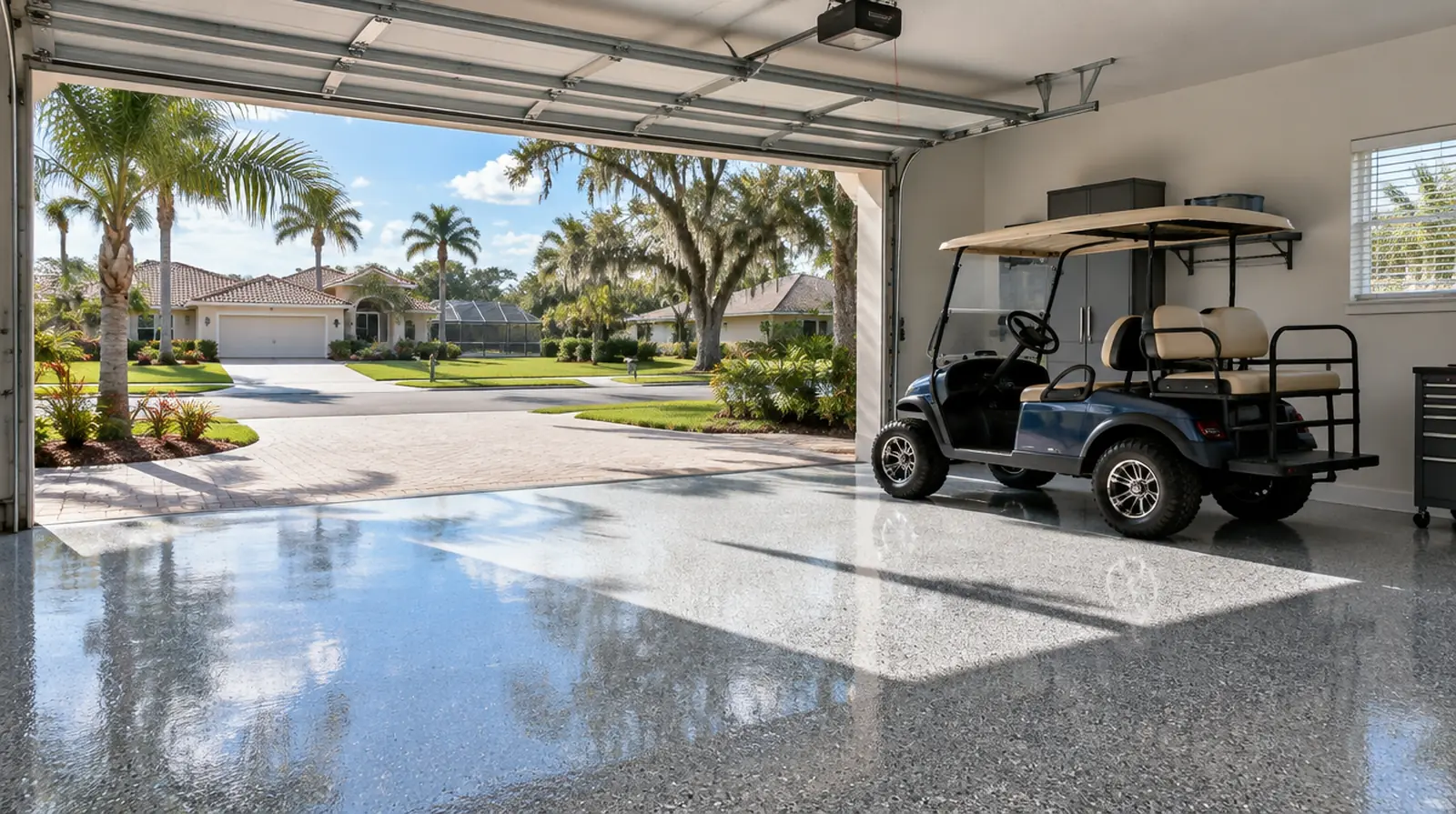
What polyaspartic is
Polyaspartic is a type of polyurea coating. It was originally developed for industrial use where downtime was expensive and surfaces had to resist abrasion, chemicals and sunlight. In residential and commercial floors, it offers three big advantages: it cures quickly, it stays clear and color-stable in UV light and it is flexible and tough. Those properties make it a natural fit for Florida garages and outdoor-adjacent spaces.
Why sunlight matters
Standard epoxy is an excellent material, but sunlight breaks it down over time. Floors exposed to direct sun turn amber and chalky. Here, garage doors stay open for hours, and lanais, entries and covered patios sit in bright light all year. Polyaspartic does not yellow, so colors stay true and clear coats stay clear. That is the main reason we use it as a topcoat over most of our systems and as a complete system when speed is important.
One-day installation
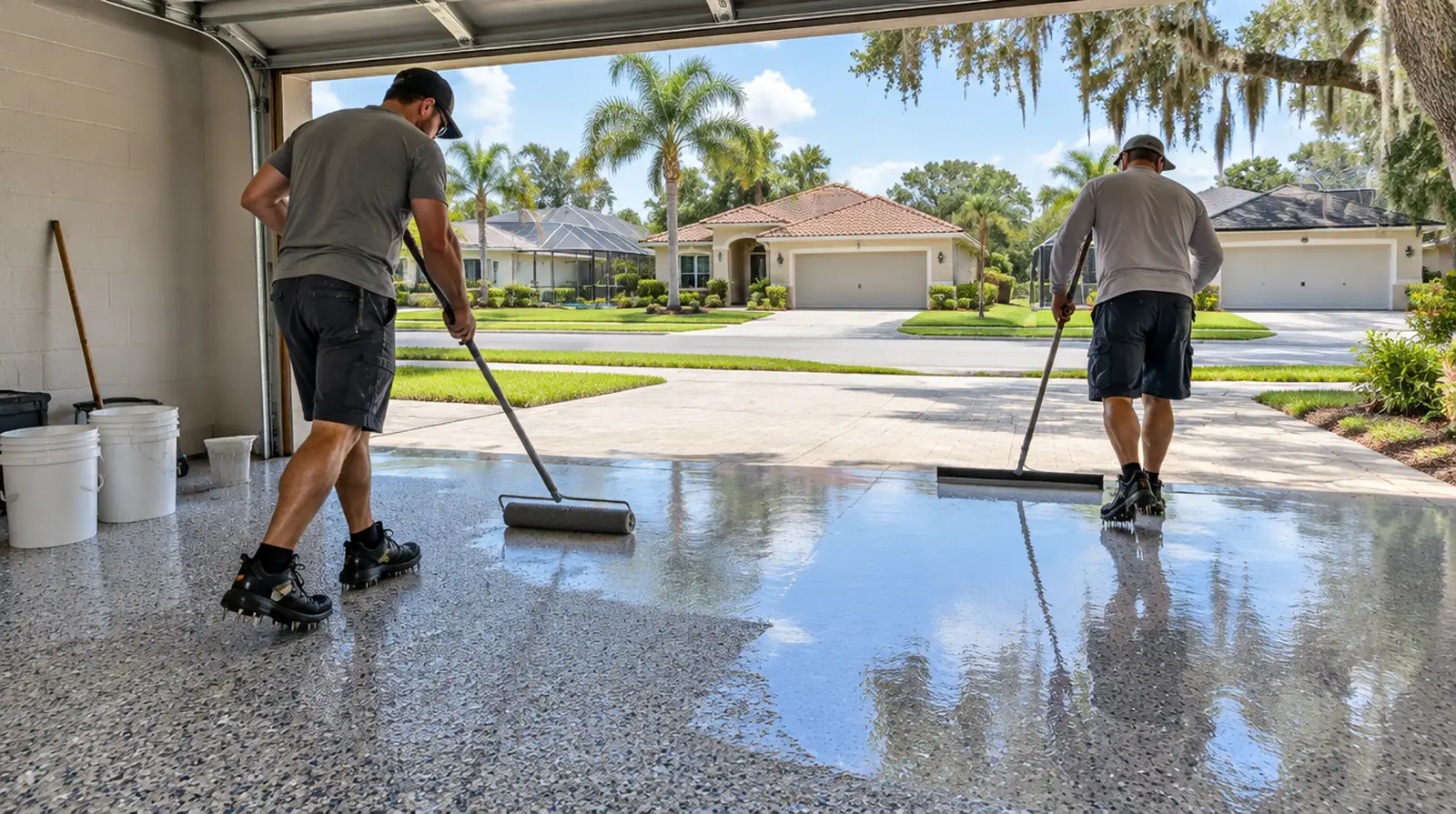
Because polyaspartic cures quickly, a full floor system can usually be installed in a single day. We grind and repair in the morning, apply the base coat and flakes, scrape and vacuum, then apply the clear topcoat in the afternoon. You can walk on the floor that evening or the next morning and usually park within 24 to 48 hours. That is a huge benefit for families who need the garage, landlords between tenants and businesses that cannot close for long.
Handling heat and humidity
Fast cure has a tradeoff: working time is short, and heat shortens it further. Our crews work in small, coordinated batches and adjust products for temperature and humidity. In summer, we often start early in the morning before the garage heats up. This experience is what separates a smooth, even polyaspartic floor from one with roller marks and lap lines.
Hot tires and heavy use
Polyaspartic has excellent resistance to hot tire pickup, abrasion and many chemicals, including gasoline, oil and pool chemicals. It flexes slightly with the slab rather than cracking. In commercial spaces, it handles carts, foot traffic and cleaning equipment very well.
Where we use it
- Garages that need to be back in service quickly
- Screened lanais and covered patios
- Front entries and walkways under roofs
- Retail floors, salons and showrooms
- Rental homes between tenants
Polyaspartic versus epoxy
Epoxy builds thickness affordably and bonds extremely well, which is why we still use it for primers and base coats in some systems. Polyaspartic excels as a wear layer and in UV exposure. Many of our floors combine both: an epoxy base for build and bond and a polyaspartic top for durability and color stability. We explain which combination suits your floor during the estimate.
Care
Sweep away sand and grit, wipe spills promptly and wash occasionally with a mild cleaner. Avoid harsh solvents. If the gloss dulls after many years, a fresh topcoat restores it.
Questions
Does it smell?
Some products have an odor during installation. We ventilate the space well, and the smell fades quickly as it cures.
Can it be applied outdoors?
Yes, on properly prepared concrete. For pool decks we also look at sealers and textured systems.
Is it more expensive?
Material costs are higher, but the faster schedule and longer color life often make it the better value.
Schedule your estimate
Contact us to get a quote, or learn about our flake systems.
Ask about adding an entry or mudroom on the same day. Small add-on areas fit easily into the schedule.
Get a one-day floor quote
Call (407) 890-7970 for a free estimate.