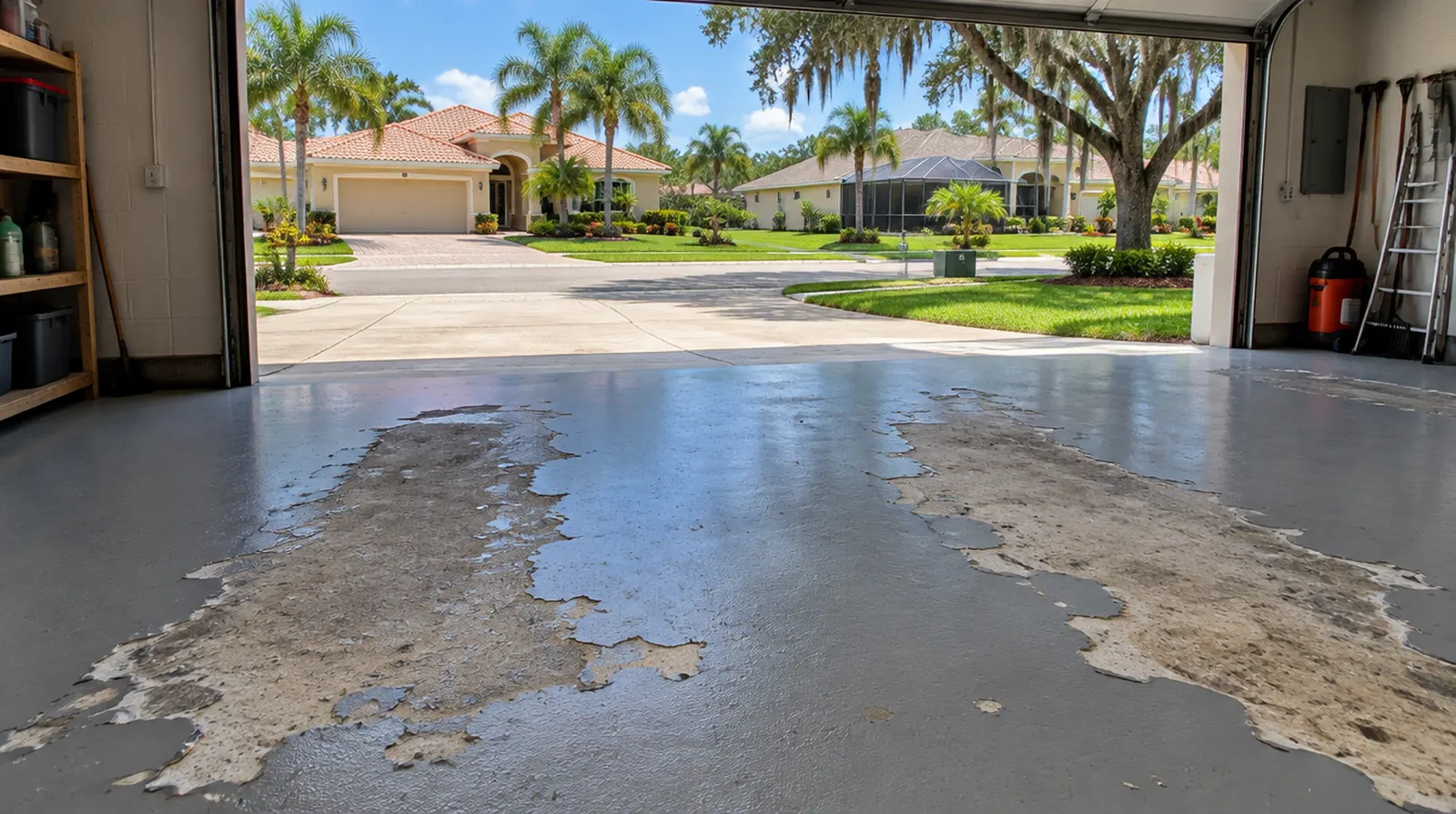
Why floors fail
Most coating failures come down to a few causes. The most common is poor preparation. A floor that was only washed or acid etched does not give the coating a strong grip, and Florida heat plus hot tires finish the job. The second is moisture coming up through the slab, which pushes coatings off from below and creates bubbles and white haze. The third is the wrong product. Thin water-based paints, epoxy topcoats exposed to sunlight and products not rated for vehicles all wear out early. Understanding the cause matters, because repairing a floor without fixing the cause just repeats the failure.
Diagnosing your floor
We start with an inspection. We look at where the coating is failing, whether it lifts in sheets or flakes, whether the concrete underneath looks clean or dusty and whether there are signs of moisture. We may do adhesion tests and moisture readings. Then we explain what went wrong and give you options.
Repair options
Spot repair
If the coating is mostly well bonded and only small areas have failed, we can grind out damaged sections, patch and blend. Spot repairs work best on flake floors, where texture hides the edges.
Grind and recoat
When the coating is sound but worn, scratched or yellowed, we abrade the surface and apply a new topcoat. This restores gloss and protection without removing everything.
Full removal and new system
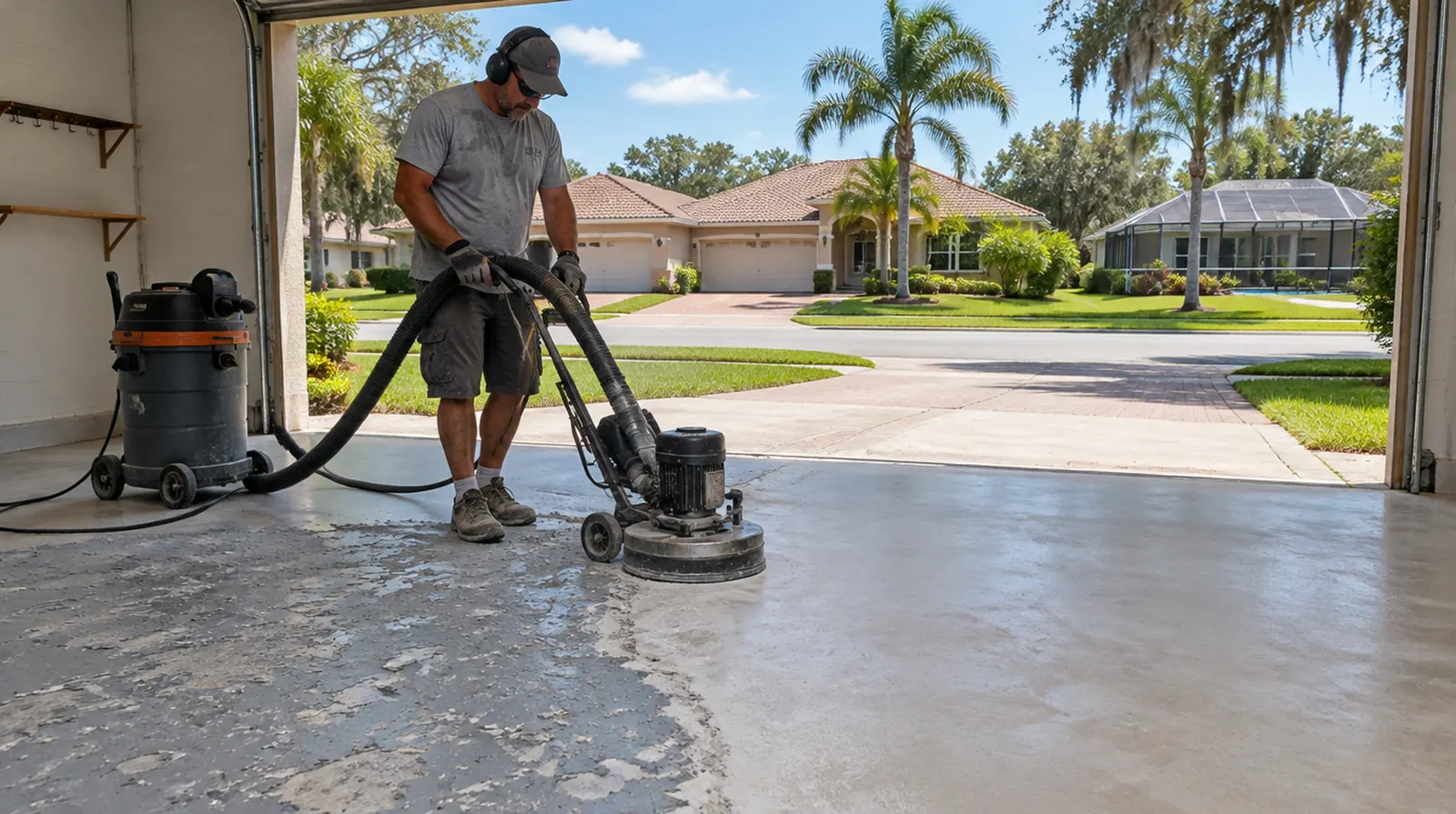
When adhesion is poor across the floor, the only lasting fix is removal. We grind off the old coating, repair the concrete and install a new system with proper primers and topcoats.
Hot tire marks and stains
Some floors show brown or black tire marks that will not scrub out. These come from plasticizers migrating out of tires into soft coatings. A harder, chemical-resistant topcoat stops it. For stained floors, light abrasion and recoating usually makes them look new.
Yellowed epoxy
If your floor has turned amber where sunlight hits it, the topcoat was not UV-stable. We abrade it and apply a polyaspartic or aliphatic urethane topcoat that will not yellow. In some cases, a fresh color coat is needed to even out discoloration.
Concrete damage
Sometimes the coating is fine but the concrete underneath is cracked or damaged. We fill cracks, rebuild spalled edges and level low spots with epoxy mortar before recoating.
Storm and water damage
After heavy storms or flooding, coatings can be scratched by debris or stained by standing water. Most well-installed floors survive water exposure, but we can clean, repair and recoat damaged sections.
Preventing future problems
We explain how to care for the repaired floor, which cleaners to use and what to avoid. We also recommend mats and protective pads where heavy items sit.
Questions
Can you fix a DIY kit floor?
Yes. In most cases, the best approach is full removal and a professional system.
Will the repair match?
Exact matches are difficult on solid colors. Flake floors blend more easily. We discuss expectations before starting.
How long does it take?
Topcoat refreshes take a day. Full removal and a new floor usually take one to two days.
Get your floor fixed
Contact us with photos of the damage, or compare polyaspartic coatings for a long-lasting replacement.
Send photos of the worst areas and a wide shot of the whole floor. We can often spot the likely cause before we visit.
Most repair visits take less than an hour.
Get a repair estimate
Call (407) 890-7970 for a free estimate.