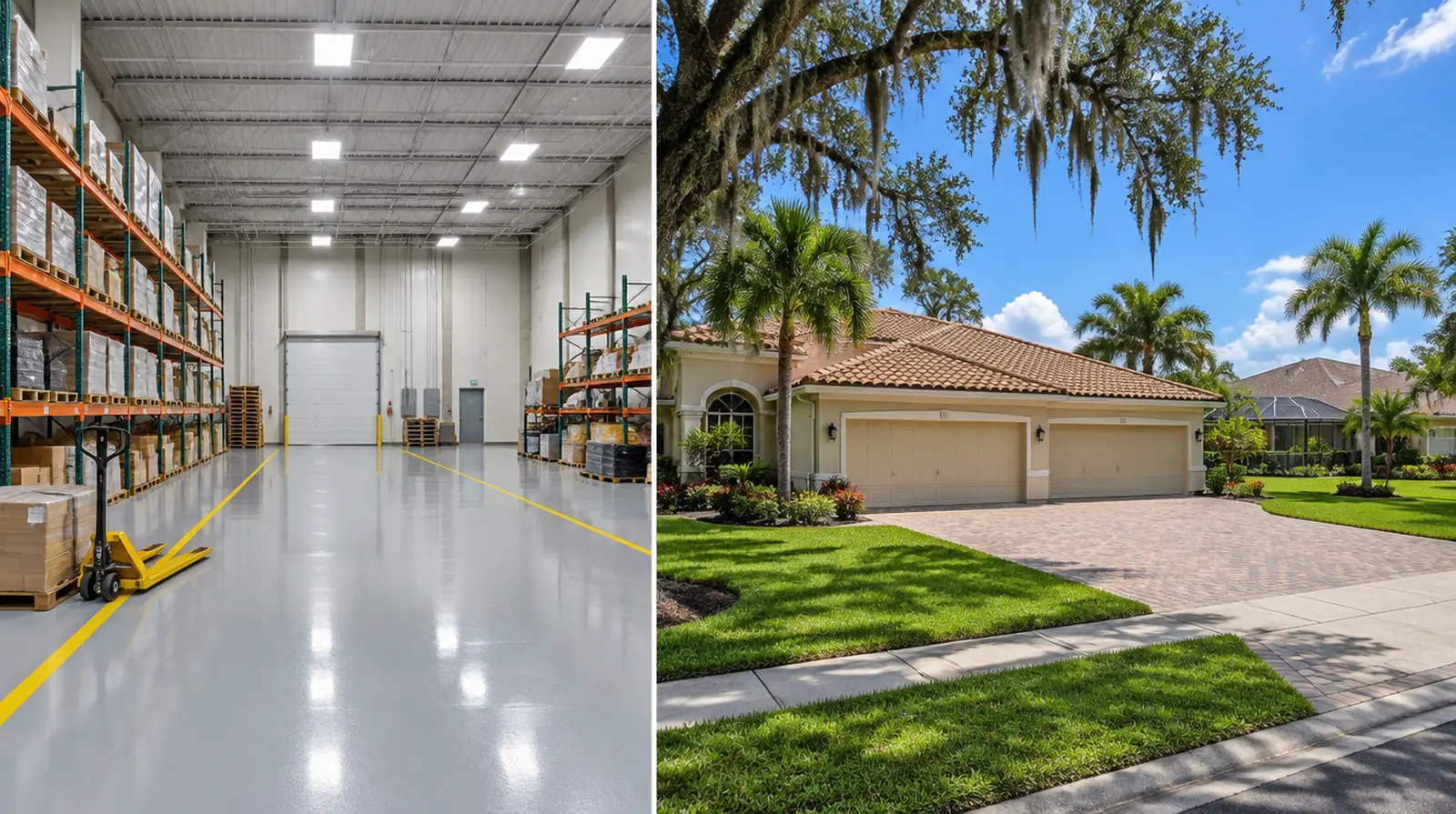
Floors for a growing business corridor
The east side of the county has grown fast, with research and technology companies near the university, medical offices, restaurants, retail centers and light industrial parks. Each of those spaces needs a floor that matches its daily work. A tech lab needs a clean, low-dust surface. A restaurant kitchen needs slip resistance and sanitation. A warehouse needs a floor that handles forklifts and pallet jacks. We design coating systems around those requirements, not around a one-size-fits-all product.
Systems we install
High-build epoxy
Thick, chemical-resistant epoxy works well in warehouses, light manufacturing, storage areas and back-of-house spaces. It is easy to clean and can be striped for traffic lanes and safety zones.
Urethane cement
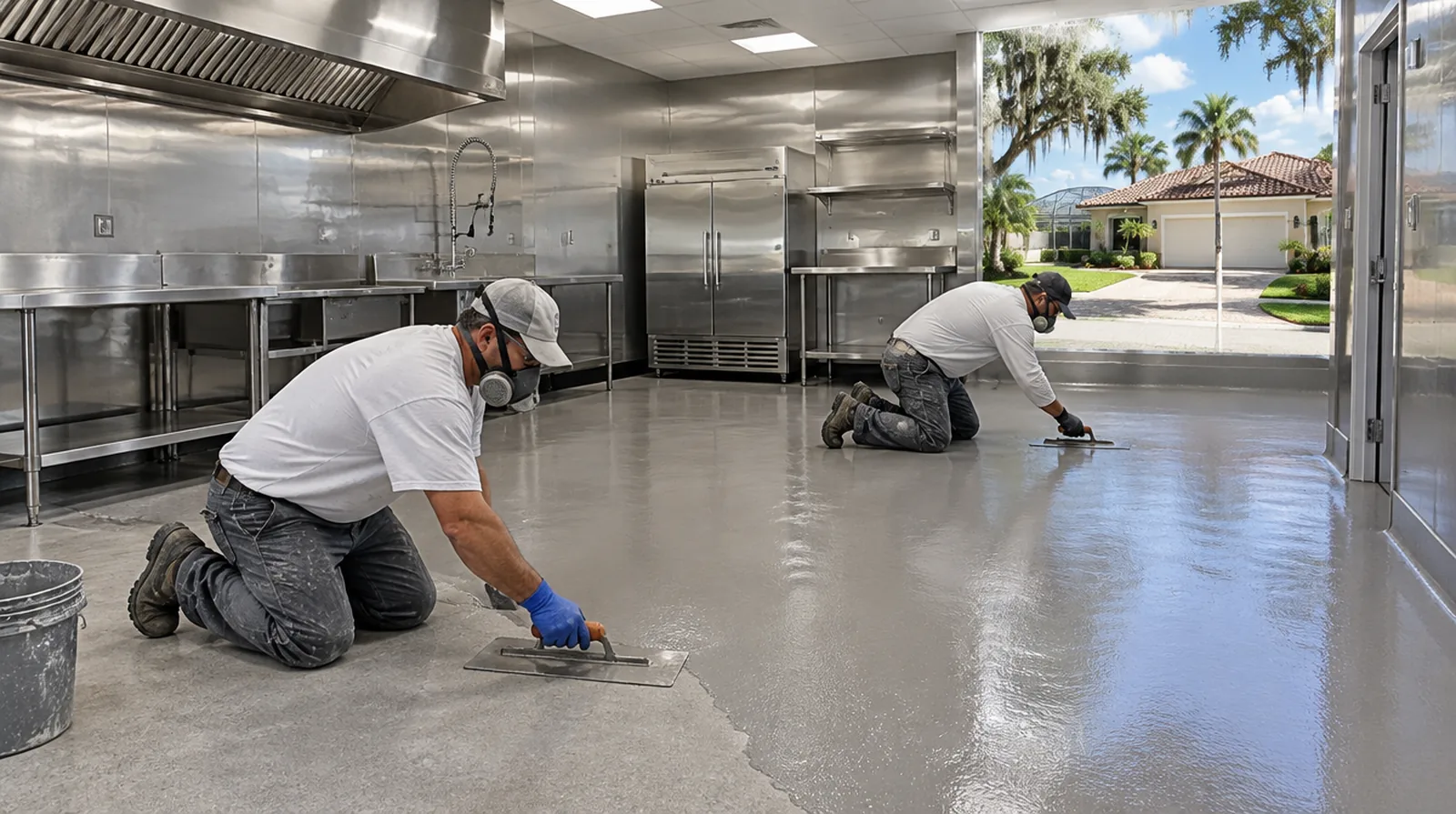
For kitchens, breweries and food production, urethane cement handles hot water, steam cleaning, grease and thermal shock. It can be installed with integral cove bases so there are no seams where bacteria can hide.
Static-control and lab floors
Electronics work and certain labs need floors that dissipate static. We can install conductive or static-dissipative systems with documented resistance testing.
Decorative commercial floors
Retail stores, salons, gyms and offices often choose flake, quartz or metallic systems that look good and stand up to foot traffic.
Working around your schedule
Downtime costs money. We phase projects so parts of a building stay open, work nights and weekends when needed and use fast-curing polyaspartic and urethane systems to shorten closures. Before we start, we agree on a schedule, dust and odor controls and a plan for moving equipment.
Preparation for commercial slabs
Commercial floors often have oil contamination, old coatings, curing compounds or tile adhesive. We remove those with grinders and shot blasters, repair joints and cracks and test moisture. Large slabs on grade in Florida can have significant vapor emissions, so moisture mitigation is often part of the plan.
Safety and compliance
We add slip-resistant aggregates where floors get wet, mark aisles and hazard areas with durable line striping and choose products that meet the cleaning and chemical exposure requirements of your industry. For food service, we use systems that support health code requirements for cleanable, nonabsorbent surfaces.
Auto shops and service centers
Repair shops deal with oil, brake fluid, hot tires, dropped tools and floor jacks. We use thick epoxy or polyaspartic systems with chemical-resistant topcoats and add texture in wash bays. Bright floors also improve visibility for technicians working under vehicles.
Maintenance support
We provide cleaning guidelines and can recommend scrubbers and chemicals that will not damage the coating. Recoating a worn traffic lane is far less expensive than a complete replacement, and we are glad to inspect floors periodically.
Questions
How long will my business be closed?
Many projects can be done over a weekend. Larger floors are phased.
Do you work with general contractors?
Yes. We regularly coordinate with builders, property managers and tenants on build-outs.
Can you coat over existing epoxy?
Often, if it is well bonded. We test adhesion and may grind and recoat instead of removing everything.
Get a commercial quote
Contact us with your square footage and use, or read about polished concrete for retail and office spaces.
Documentation
Every commercial project includes a written warranty on adhesion and workmanship, plus product data sheets, batch numbers and maintenance guidance. Facility managers find those records useful for audits, insurance and future planning.
We also offer walkthroughs before tenants move in so everyone agrees on the finish and color.
Request a commercial quote
Call (407) 890-7970 for a free estimate.