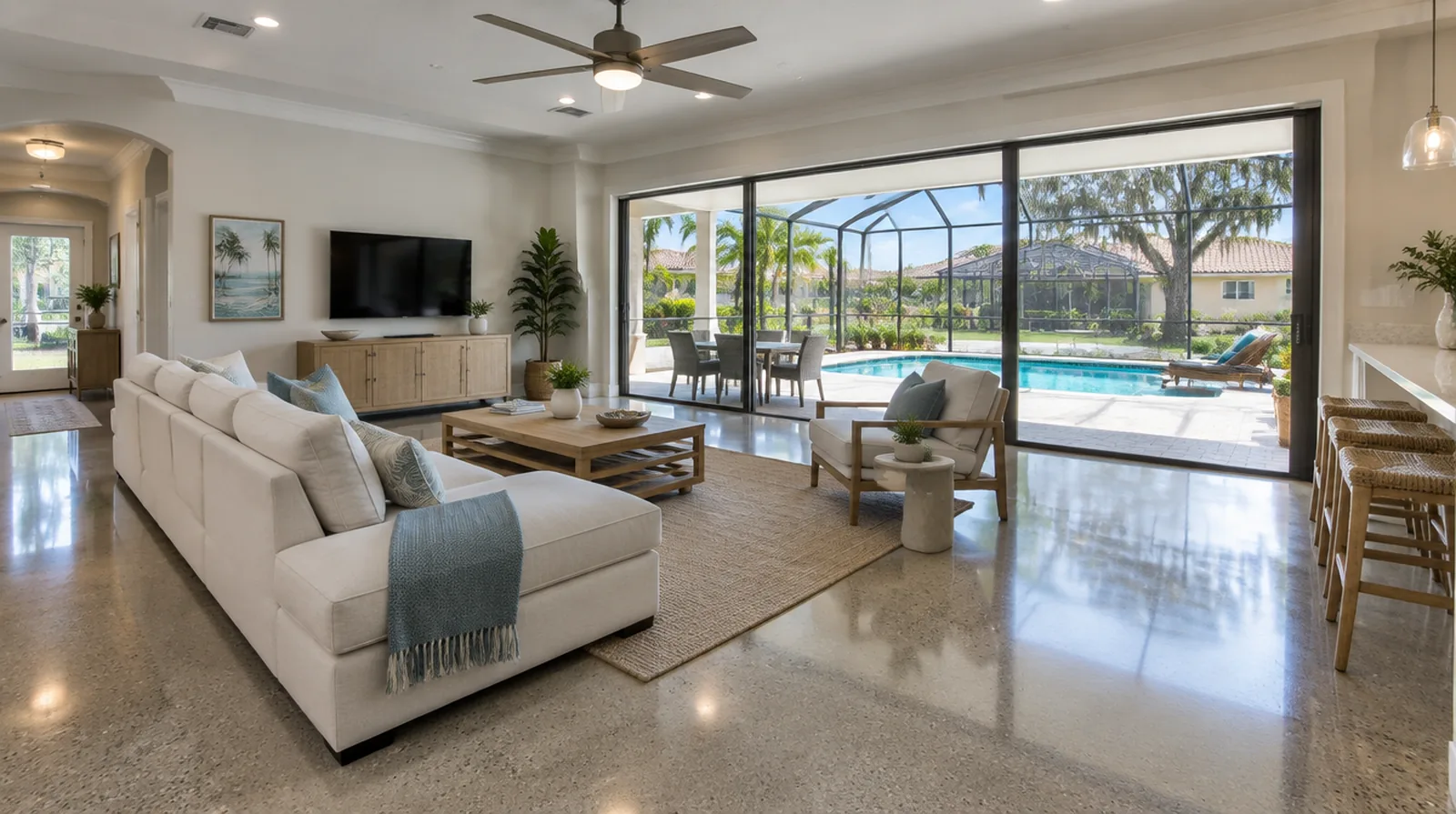
A floor made from the slab itself
Polished concrete is not a coating. We grind the slab with progressively finer diamonds, harden it with a chemical densifier and polish it until it reflects light. The surface becomes dense and smooth, resisting dust and stains. Since nothing sits on top, there is nothing to peel or delaminate. In a climate where moisture can move through slabs, that is a real advantage. Polished concrete lets the slab breathe while still giving you a clean, finished floor.
Why it suits Florida homes
Most homes here are built on slabs, and many have carpet or tile laid directly over the concrete. When those finishes wear out, homeowners are often surprised to learn that the slab underneath can be polished. Concrete stays cool underfoot in summer, does not trap allergens like carpet, and holds up to sand, pets and kids. Removing old flooring can reveal tack strip holes, adhesive and cracks, but we can fill and blend most of those or turn them into part of the character of the floor.
Levels of grind and shine
Cream finish
A light grind that keeps the top cream layer of the slab, showing little or no aggregate. It looks smooth and uniform.
Salt and pepper
A slightly deeper grind that exposes fine sand and small aggregate for a speckled appearance.
Exposed aggregate
A deeper grind that reveals larger stone for a terrazzo-like look. This works best on slabs with consistent aggregate and minimal patching.
Gloss levels range from a soft matte to a high, mirror-like shine. Satin is the most popular choice for homes.
Stains and dyes
Polished concrete can stay natural gray or be colored with dyes. Warm tones, soft browns and cool grays are popular. Dyes can also hide variations and patches from old flooring removal.
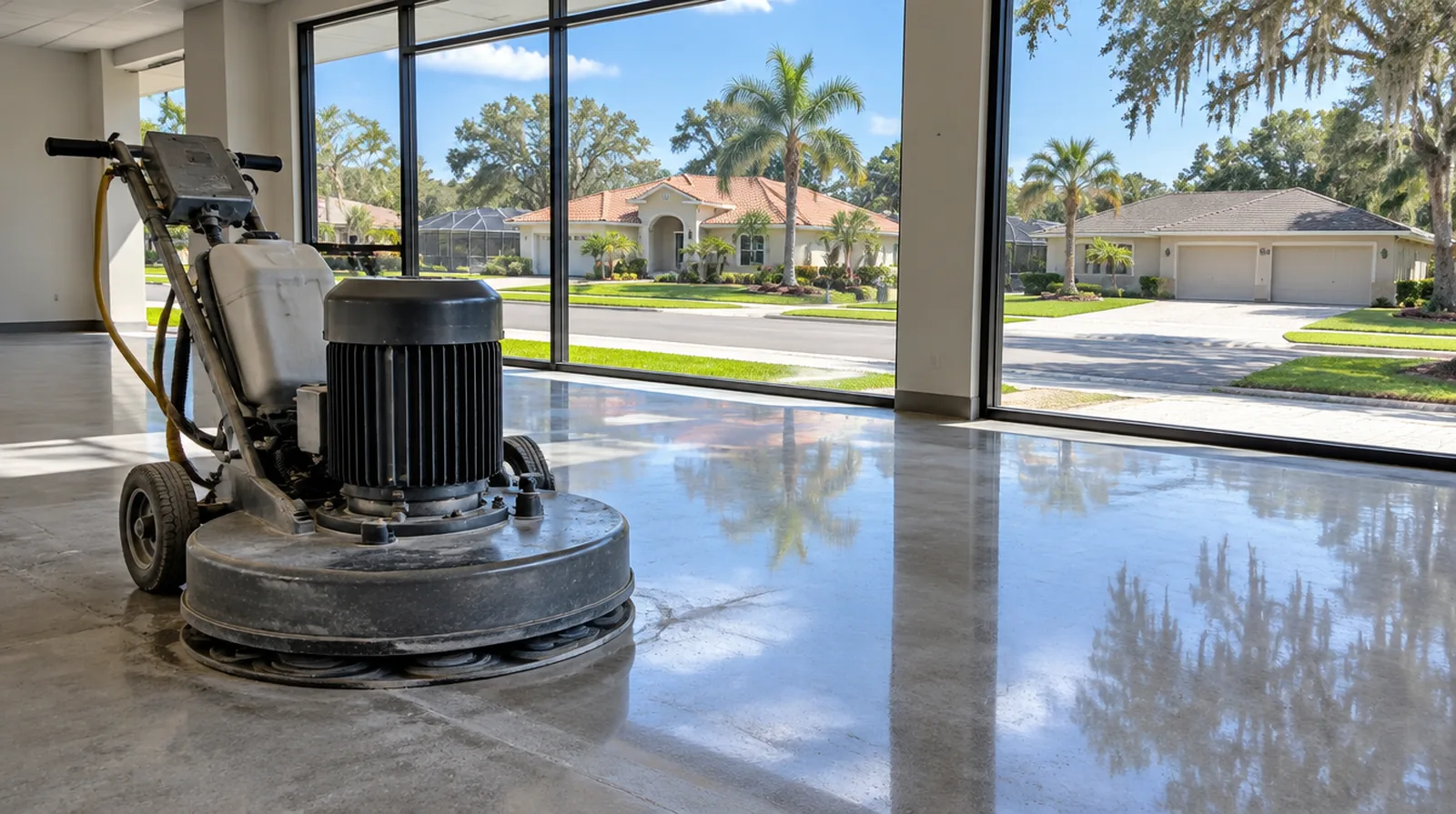
Commercial spaces
Retail stores, restaurants, offices, gyms and studios choose polished concrete because it is durable, easy to maintain and looks modern. It handles carts, chairs and foot traffic without coatings to wear through. Maintenance is usually just dust mopping and auto scrubbing with a neutral cleaner. For new tenant build-outs, we can polish early in construction and protect the floor until opening.
Guarding against stains
Polished concrete resists stains but is not invisible to them. Oils, wine, citrus and some cleaners can mark the surface if left sitting. We apply a stain guard after polishing for extra protection, especially in kitchens and restaurants.
Care
Dust mop daily or as needed to remove sand, which can dull the surface. Clean with a pH-neutral cleaner and water. Every few years, a quick burnish restores the shine.
Questions
Will cracks show?
Existing cracks will remain visible, though we can fill them with color-matched material.
Is it slippery?
Properly polished concrete is generally not slippery when dry. Keep it clean and dry for best traction.
Can a garage be polished?
Yes, though most garages are better served by a coating because of oil and hot tires. See garage floor epoxy.
Get a polished concrete quote
Contact us to schedule a visit and see samples of finishes.
Testing a small area first
Every slab polishes a little differently depending on its mix, age and finish. We are happy to grind a small test patch in a closet or corner so you can see the aggregate and sheen on your own floor before committing to the whole house.
Get a polished concrete quote
Call (407) 890-7970 for a free estimate.