What makes metallic floors different
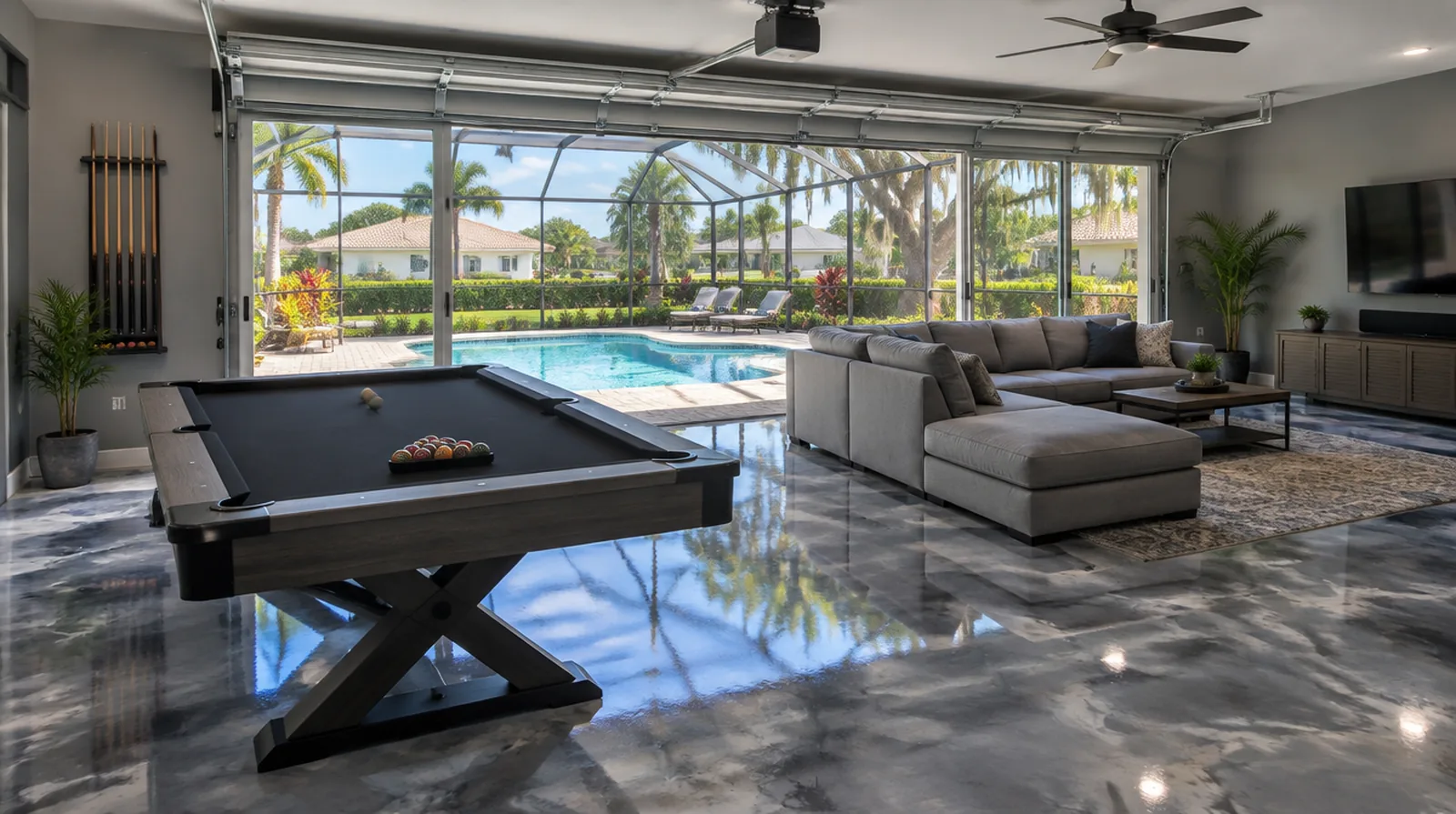
Metallic epoxy contains fine pearlescent pigments that move and settle as the coating levels. Our installers guide that movement with rollers, brushes, sprayers and solvents to create swirls, ripples, veining and lunar-style patterns. Because every pour reacts differently to the room, temperature and technique, no two floors look the same. The result is a deep, glossy surface that looks like polished stone, flowing water or molten metal.
Where metallic floors shine
In Florida homes without basements, many families convert part or all of a garage into a game room, home office, gym or studio. Metallic epoxy turns that space into something that feels finished and intentional. It also suits bonus rooms, home bars, salons, boutiques, showrooms, car display garages and restaurant waiting areas. Businesses like it because the floor itself becomes part of the design.
Preparation still comes first
A metallic floor is unforgiving of a bad slab. Every crack, joint and patch can telegraph through the finish. We grind the concrete flat, fill cracks and joints and skim-coat rough areas so the surface is uniform. Moisture testing matters even more here, because vapor pushing up through the slab can cause bubbles or haze in a glossy metallic coat. When readings are high, we lay down a moisture-mitigating primer first.
The installation
Primer and base color
A primer seals the slab, then a tinted base coat sets the underlying tone. Dark bases make metallic colors pop; light bases give a softer, more marble-like look.
Metallic pour
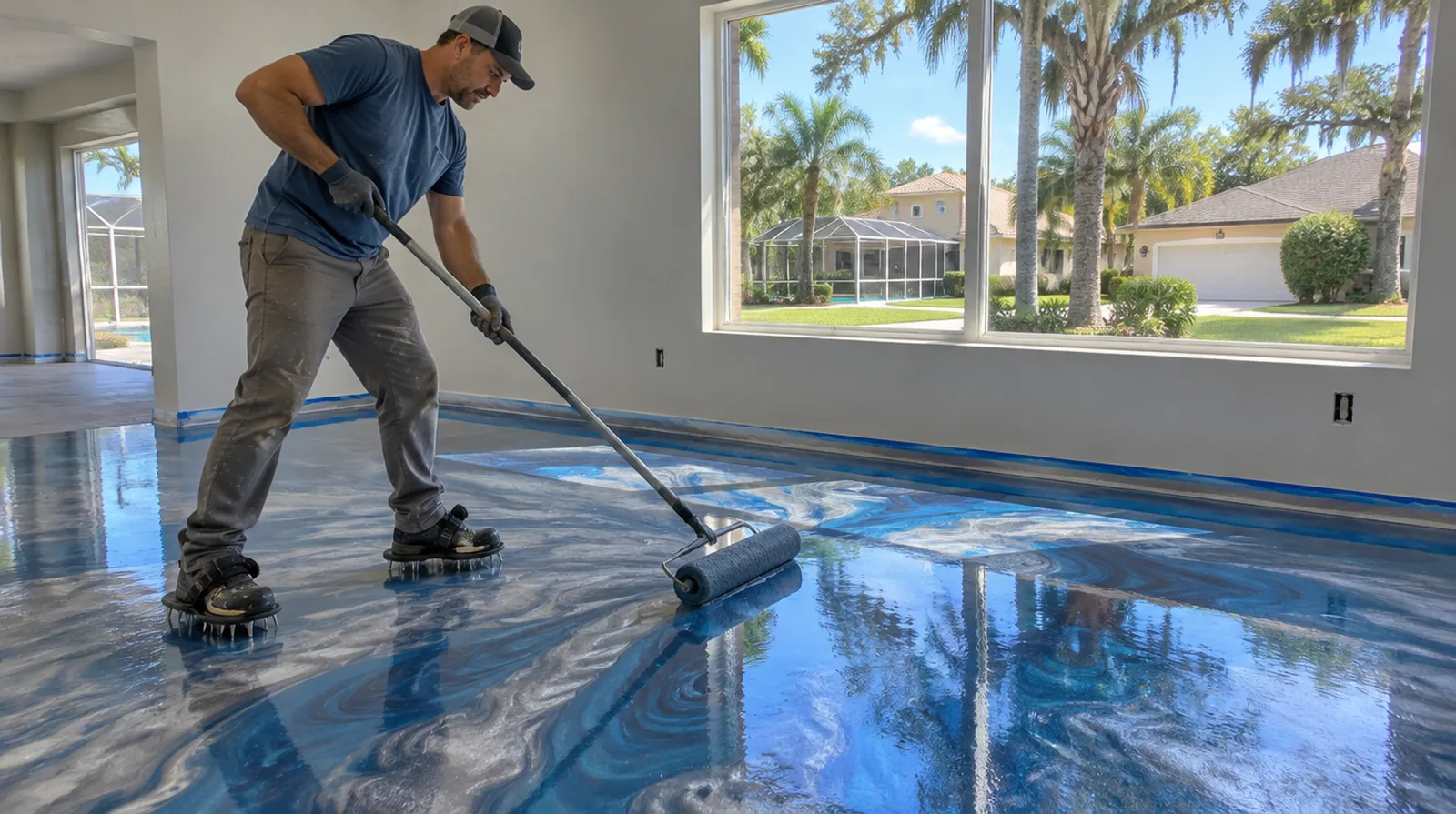
We mix the metallic pigments into clear epoxy and pour it in sections. While it is wet, we work the material to create the pattern you chose, whether subtle and calm or bold and dramatic. Timing is critical. We work as a team so edges blend before the epoxy starts to set.
Protective topcoat
Because metallic epoxy is soft compared with industrial topcoats, we finish with a clear urethane or polyaspartic layer. That layer adds scratch resistance and, importantly, UV stability. Rooms with sliding doors and big windows get a lot of light here, and an unprotected epoxy would slowly yellow.
Choosing colors
Popular choices include silver and charcoal, copper and bronze, ocean blues and soft whites that resemble marble. We bring physical samples and show photos of past floors so you can picture the look in your space. You can also combine two or three colors for a custom blend.
Living with a metallic floor
These floors are easy to clean with a dust mop and a damp microfiber pad. Use felt pads under furniture, avoid dragging heavy items and put mats at exterior doors to catch sand. Small scratches in the topcoat can be buffed or recoated without disturbing the metallic layer beneath.
Time and cost
A typical room or garage conversion takes two to three days, including prep, pour and topcoat. Metallic floors cost more than standard garage epoxy because of the extra materials, labor and skill required, but they cost far less than many high-end tile or stone options and have no grout lines.
Questions
Is a metallic floor slippery?
It is glossy, so we can add a fine anti-slip additive to the topcoat in areas that may get wet.
Can it go over tile?
Sometimes, but we usually recommend removing tile and coating the slab for the best bond and a smooth result.
Will it work in a garage?
Yes, with the right topcoat. Many car enthusiasts choose metallic floors for display garages.
Start your custom floor
Contact us to see samples and get a free estimate, or look at polished concrete for a more natural finish.
Design my metallic floor
Call (407) 890-7970 for a free estimate.